
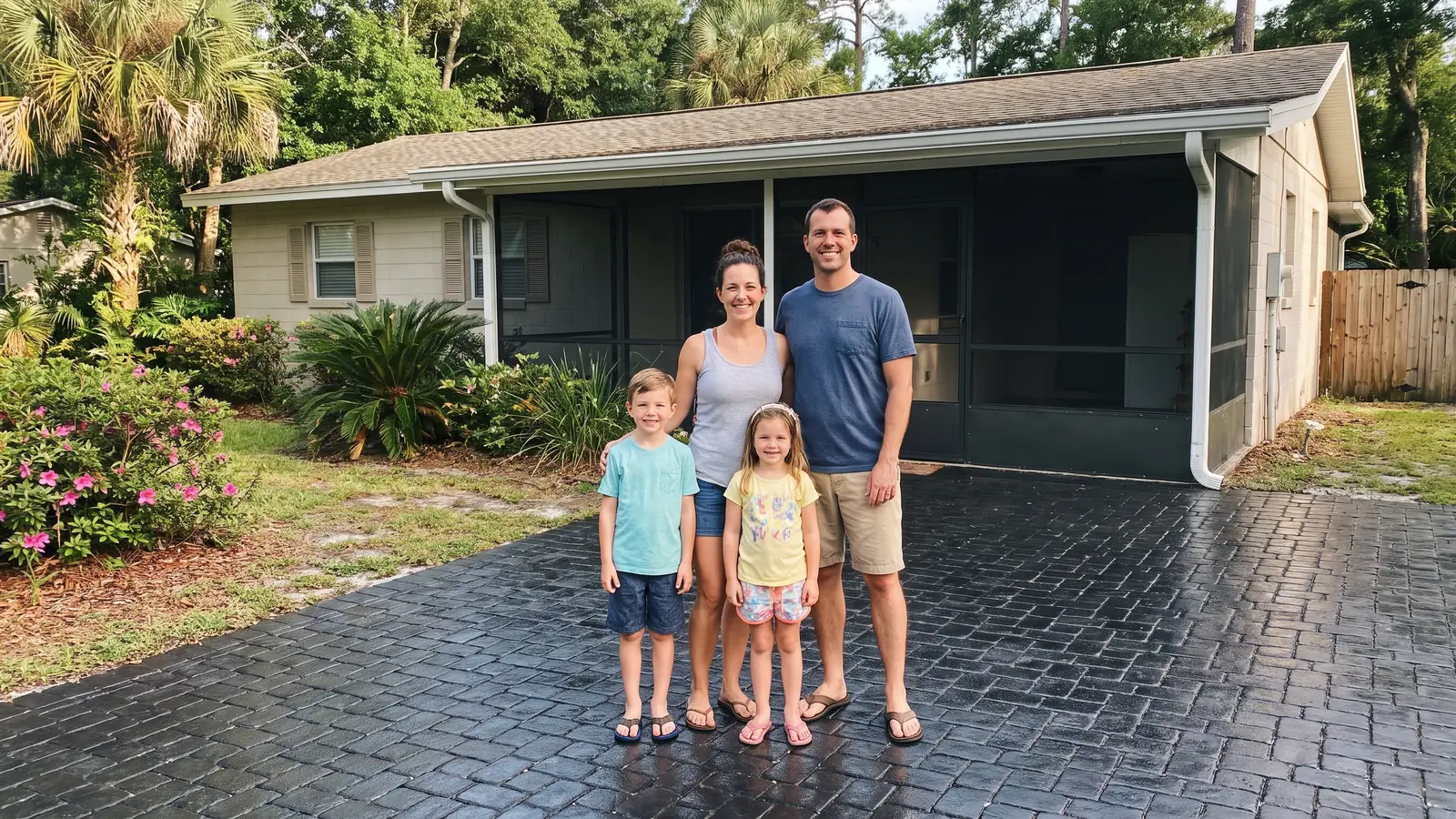
Paver sealing for Oceanway homes
Paver Sealing in Oceanway, FL
Oceanway grew from farm country into subdivisions, and (904) 593-3709 books a free estimate to seal the pavers there.
- Brings out deeper paver color
- Fresh joint sand helps lock pavers in place
- Gives weeds less room to grow
- Makes the surface easier to keep clean
- Free estimate, no obligation
Request a Free Estimate
Free, no obligation.
Fast, careful paver sealing in Oceanway
Paver sealing is available across Oceanway, from the 1950s streets of Oceanway Manor to the newer subdivisions of north Jacksonville. A local contractor washes, refills the joints and seals drives, patios and pool decks, and the estimate is free of charge. When you reach out, expect to hear back within 1 business day, usually much sooner. You can book a free estimate to begin.
Say your pavers went in with the house and now look chalky, with weeds along the edges and a few sunken spots by the garage. A wash, fresh sand and sealer would give the surface one even color, and the weeds would have far less room to grow back. To talk it over, call (904) 593-3709 and describe what you see.
Why hire a local paver sealing contractor in Oceanway?
Oceanway has both older ranch lots and brand-new pavers, and the two need different handling. A local contractor can tell which you have, so book a free estimate to ask.
An in-person inspection
The contractor inspects your Oceanway pavers and names a price afterward. A bid for any size of job is welcome.
Prices worth comparing
Jacksonville price lists are public, so an Oceanway quote can be checked in a minute.
New pavers, handled right
If your Oceanway pavers are new, the contractor can say whether to wait before sealing. Sealing too early can trap a white haze.
You decide
Pick the finish, the date and whether to go ahead. Oceanway replies come within 1 business day, usually much sooner.
Get Your Free Estimate in Oceanway
Tell us about your pavers in Oceanway.
Free, no obligation
What paver problems show up most in Oceanway?
Sunken pavers and washed-out sand
A Jacksonville sealing company says sinking and washouts are the main reason pavers fail, because unsealed joint sand washes out and storm water erodes the base. Oceanway gets the same heavy summer rain as the rest of Duval County, about 52 inches a year. That means a drive that is a few years old may already have low joints. Once the sand is gone, the pavers lose support and start to rock and tilt. Once that happens, a plain sealing job is not enough, since the low spots must be reset first. Catching it early keeps the repair small. Oceanway's growth since the early 1980s means many drives sit on newer bases, and a paver maker says a weak or poorly compacted base is a leading cause of sinking and shifting.
White haze on newer pavers
Oceanway has grown sharply since the early 1980s, and new pavers keep going in on fresh lots. Efflorescence, a white mineral deposit on cement-based pavers, often shows up in the first or second season. Unilock says rain alone may not remove it and that it must clear before sealer goes on. It does not weaken the pavers, but sealing over it can leave a cloudy look. One Jacksonville company suggests a 30 to 60 day wait after installation, and another says longer is fine. Brand-new pavers often look fine for the first season, so the haze can be easy to miss until a wet day brings it out.
Green film in shaded corners
Landscape trade guidance says moss, lichens and algae stay on interlocking concrete pavers mainly where heavy shade keeps the surface damp. North Jacksonville's wet season brings a nearly daily sea breeze and 28.81 inches of rain from June through September. A shaded patio can turn green in one summer. Cleaning removes it, and a sealed surface lets go of it more easily the next time.
Fade from summer sun
A Jacksonville paver company says the sun fades unsealed concrete pavers noticeably within 3 to 5 years, and that unsealed joints sprout weeds in that same span. Oceanway driveways are wide and open, so they take a lot of direct light, and the heat bakes in all summer. July highs in Jacksonville average about 92 degrees. Pigment that was deep at install goes flat and chalky. A coat of sealer puts a layer between the sun and the paver, and a wet look brings the depth back.
A coat you cannot identify
Pavers on 1950s to 1990s lots may have been resurfaced or sealed by earlier owners. A water-based sealer cannot be laid over a solvent-based coat, so the contractor needs to learn what is there. One company says milky or white sealer has to be stripped and not covered. A patchy, flaking finish is the usual warning sign. If you have a receipt or a product name from an earlier job, show it at the visit.
Do Oceanway Manor and the newer subdivisions need different sealing?
Yes, to a degree, because the two areas differ in age. Oceanway Manor dates to 1958, and its single-family homes were built from 1948 to 1999. Those lots may have older pavers that have settled and faded, and some have been patched over the years. Mention your street when you book a free estimate.
Oceanway was once dotted with small farms and isolated houses, and it has grown sharply since the early 1980s. Newer subdivisions have pavers that are only a few years old, and those often need a clean and a check for haze more than heavy repair. Wide, newly poured driveways cost more in total because they cover more area, but the rate per square foot may be lower for larger jobs. Call (904) 593-3709 and give the contractor the install year of your pavers, if you know it.
A street with an association may have finish rules of its own. One page for Southside homes also says natural-look sealers are likelier to count as routine upkeep than glossy ones. Read your documents, then book a free estimate and ask what finish fits.
Oceanway Manor's single-family homes were built from 1948 to 1999 and run from 1,121 to 2,103 square feet, with two to four bedrooms. Streets there carry names like Moby Dick Drive and Shamrock Avenue. A smaller lot means a smaller paver area, which costs more per square foot. To size up yours, book a free estimate.
What does paver sealing cost in Oceanway?
Safe Touch lists $1.75 to $3.25 per square foot to clean, sand and seal around Jacksonville, and that is the range to hold quotes against. An Oceanway job moves within it based on lost sand, stains and how much of the old coat has failed. A long drive and a patio together mean a bigger total at the same rate. To get a number for your lot, book a free estimate.
Strip-and-reseal costs more when an old coat has turned white or flaked, since the old film has to come off first. Small patios cost more per square foot too, because a Jacksonville cost guide says prep time does not shrink with the surface. Some companies also set a minimum job size, so a small patio may be priced at that minimum. Call (904) 593-3709 to learn which of these might apply on your lot.
| Paved area | Typical example | Clean, sand and seal |
|---|---|---|
| 300 sq ft | Small patio or walkway | $525 to $975 |
| 600 sq ft | Two car driveway | $1,050 to $1,950 |
| 1,000 sq ft | Large driveway or pool deck | $1,750 to $3,250 |
| 1,500 sq ft | Driveway plus pool deck | $2,625 to $4,875 |
Math based on the $1.75 to $3.25 per square foot that Northeast Florida paver companies publish. Your contractor sets the actual price after seeing the surface. Repairs, leveling and stripping failed sealer are usually extra.
How does a paver sealing job work in Oceanway?
Walk the lot and check the age
The contractor looks at how old your Oceanway pavers are, what they are made of, where water leaves the drive and whether any section has sunk. A Jacksonville company says low spots must be reset first, since sealer preserves them. On new pavers the check includes white haze. Older pavers get a check for an earlier coat. Oil spots, rust lines and root lift get noted too, and each is explained in terms of price. Wetlands and creeks run through north Jacksonville, so shaded corners get a second look.
Wash with the right pressure
According to a trade supplier, a washer set above 3,000 PSI risks stripping standard concrete pavers. The wash lifts dirt, green film and tire marks without harming the stone. Lower pressure with a wider tip is the usual choice on pavers, which is gentler on the joints. Rust and oil spots get their own pre-treatment. Stubborn stains may fade without fully leaving, and the contractor tells you which ones to expect before the work starts. A quick test patch shows how the surface reacts before the whole drive is cleaned.
Fill the joints
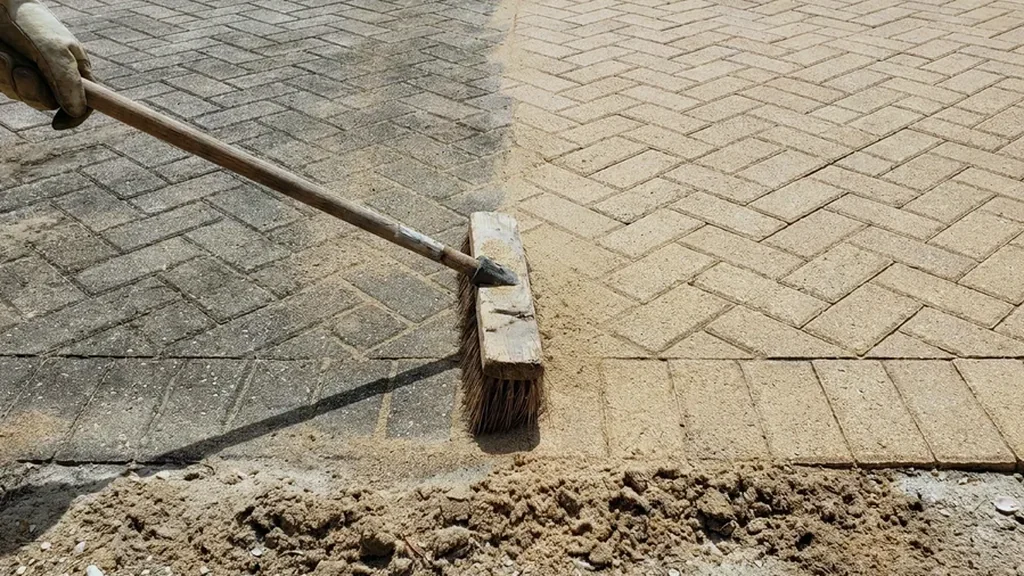
Washing takes sand out of the joints, so fresh sand goes back in before any sealer. Full joints slow weeds and ants, according to a local sealing company, and they lock the pavers together so they stop shifting under tires. The surface is swept clean when the joints are packed. Sand that is left sitting on top of the pavers can cloud the coat, so the sweep is thorough. Sand that matches the pavers helps the finished surface look clean. New subdivisions often have fresh sand in the joints, but it settles in the first rains and needs a top-up.
Let the pavers dry
A different Jacksonville page puts the dry wait at 24 to 48 hours after cleaning. The wet season, June through September, averages 28.81 inches of rain and a nearly daily sea breeze, which can push a date back. A careful contractor watches the forecast and warns you if the date will move. Damp pavers are how a coat turns milky, and about 24 dry hours after cleaning is a good guide.
Apply the sealer
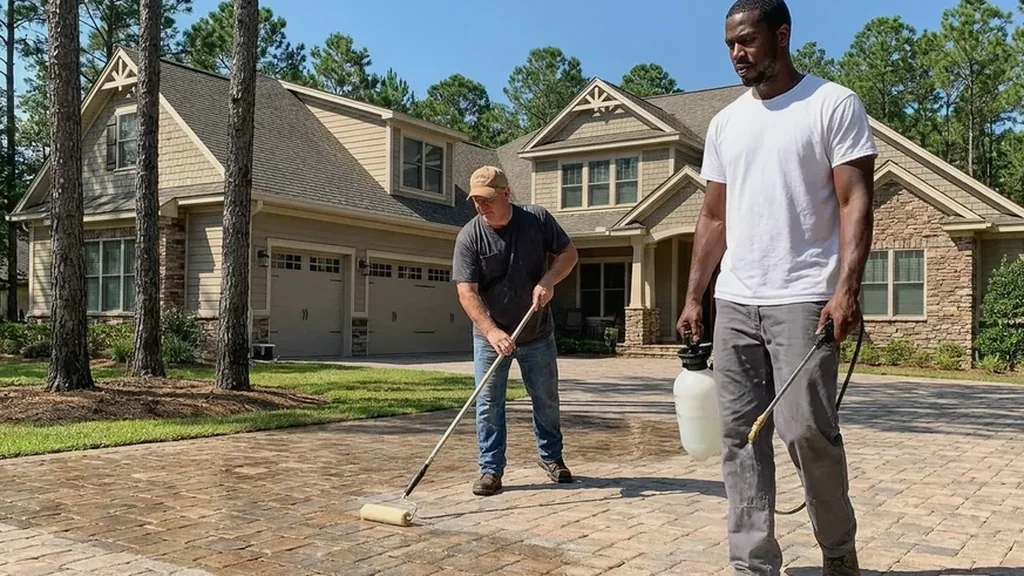
Professionals spray the sealer and back-roll it, according to the same Jacksonville companies. Matte holds a natural look, and a wet look makes color richer. Companies tend to quote two to five years between one coat and the next. One company says foot traffic can return in 2 to 4 hours and cars after 24. Plan to park on the street for a day, and keep sprinklers off the pavers while the coat cures.
Complete paver services in Oceanway
Oceanway work goes in four moves. Clean the pavers, fill the joints, wait for dry pavers, then seal. Each move depends on the one before it, and each has its own waiting time. To ask how long the moves would take on your lot, call (904) 593-3709.
Driveways, patios and pool decks each want slightly different handling. Drives take tires and oil, patios collect leaves, and pool decks collect sunscreen and chemicals. New pavers need a look at the surface first, to see whether haze is still coming through. Give the age and size of each surface when you book a free estimate.
Your finish choices are matte or wet look, and the sealer is water-based or solvent-based. A wet look deepens color and shows wear in drive lanes sooner, while matte keeps the natural stone appearance. Penetrating sealers add no shine and are often chosen for pool decks, where grip matters. Call (904) 593-3709 to talk through the choice.
Fall and spring are often easier to book in north Jacksonville, since the wet season runs June through September and brings more than half of the year's rain. A shaded patio may need an extra dry day, and the contractor will say so up front. To set a date that fits your street, book a free estimate.
Questions to ask before you hire
- What does the sealer do to water that pools on a low spot in my driveway?
- Do you treat the weeds that grow up through the joints before sanding?
- Will the sealer change the color of my pavers, and can I see a test patch first?
- If rain moves the job, how do I find out and when is the new day?
- What happens to the white powder on my pavers before the sealer goes on?
- What is on the paperwork if the estimate changes once you see the old sealer up close?
- How do you tell whether my pavers need a reseal or a full strip first?
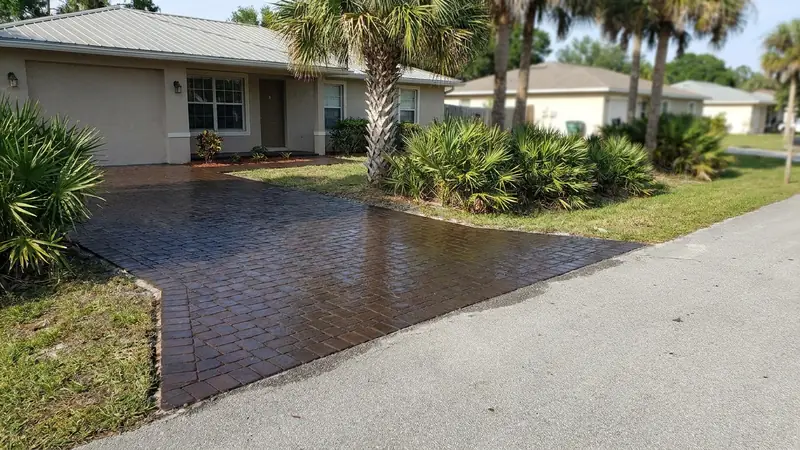
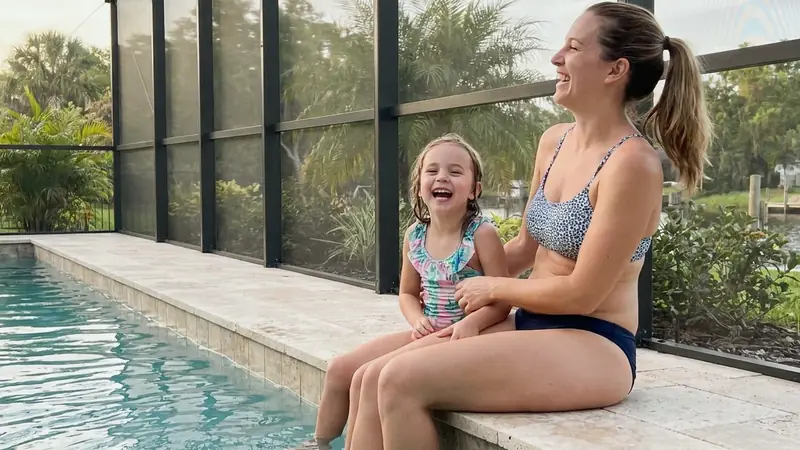
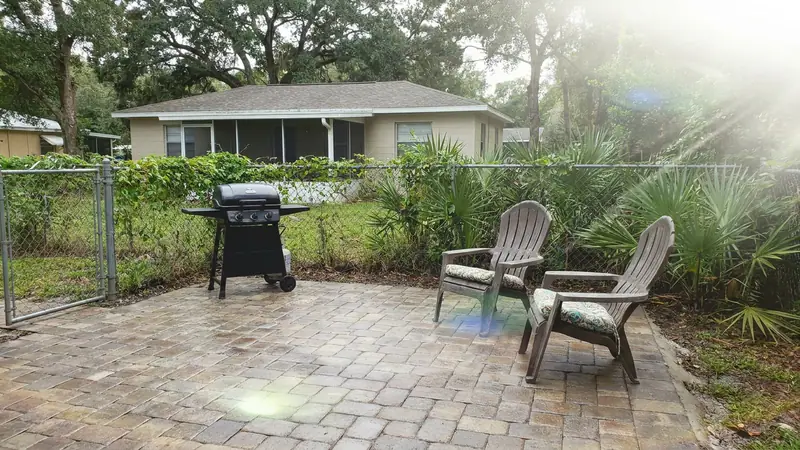
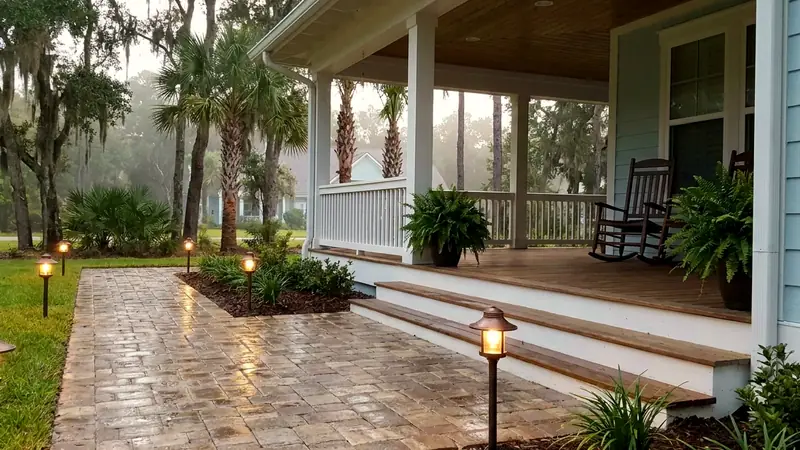
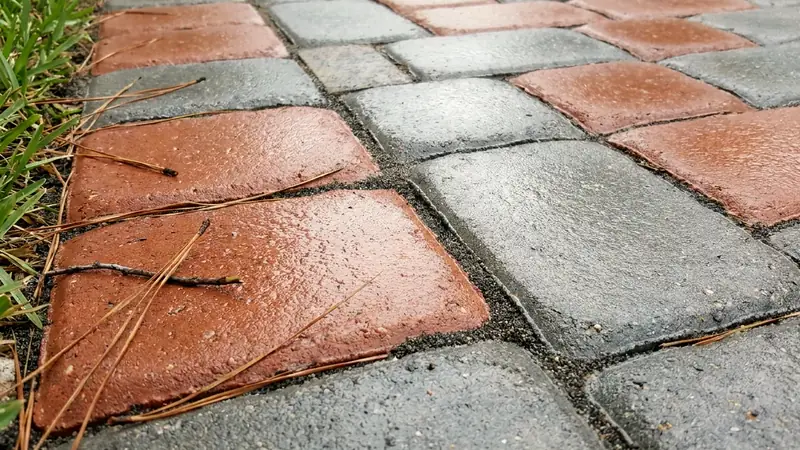
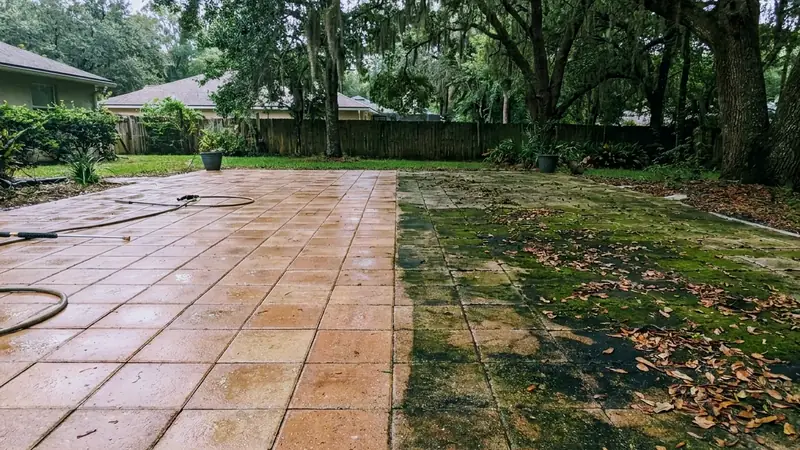
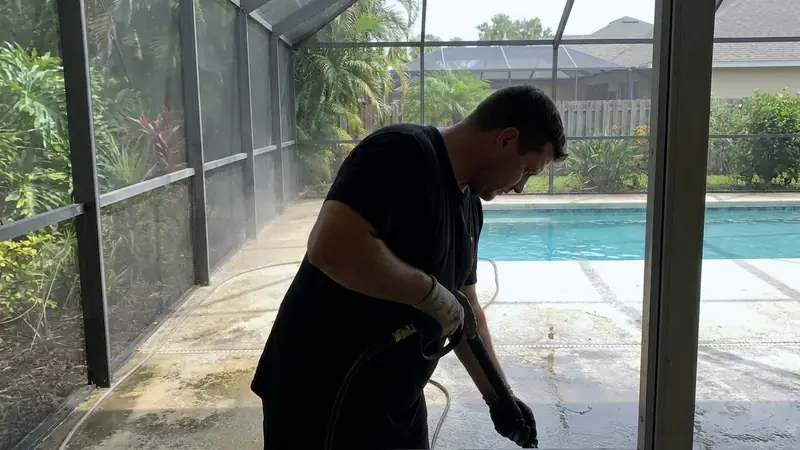
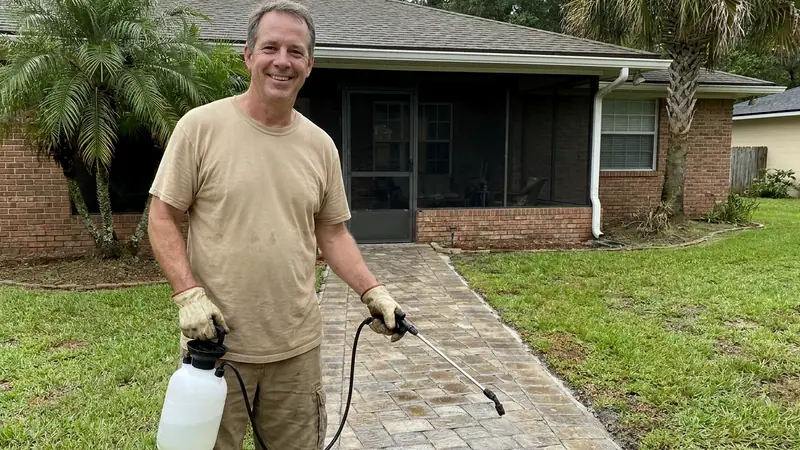
What do sealed pavers look like around Oceanway?
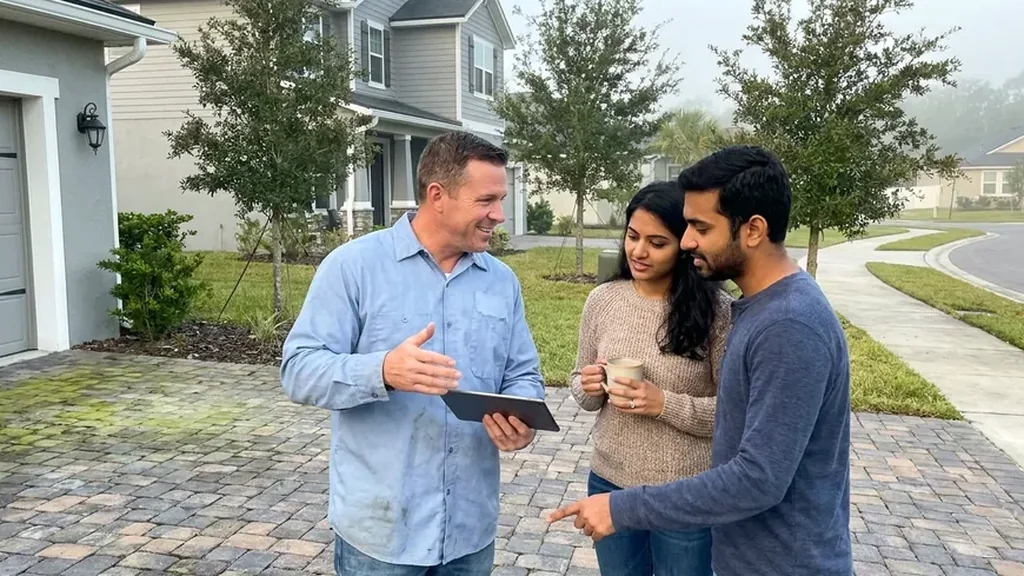
Why local matters in Oceanway
A contractor who works Oceanway knows that two kinds of pavers sit side by side here: older ones from the 1950s to 1990s and new ones from recent subdivisions. That sets the first question on every visit, which is how old the pavers are and what is on them. Someone from outside north Jacksonville may treat them the same. To get a north Jacksonville contractor on the phone, call (904) 593-3709.
Weather knowledge counts too. Daily sea-breeze storms in summer make drying days unpredictable, and well-water rust shows up on larger lots. A crew that knows north Jacksonville plans around both, with extra sand on hand and a rain plan ready. Use book a free estimate to ask how the contractor reschedules when a storm rolls through.
Local contractors also know the housing mix. A 1958 home in Oceanway Manor and a newer build call for different prep. Knowing the difference saves time on the quote and avoids surprises on the day. If you are unsure which you have, call (904) 593-3709 and describe the age of the house.
Oceanway is still a place where one lot can be a quarter-acre of new pavers and the next an old farm parcel. A contractor who works here learns to read each driveway on its own terms. That saves time and avoids a one-size quote. To get the read on yours, call (904) 593-3709.
What is Oceanway known for, and what is around it?
Oceanway is a north Jacksonville Jacksonville neighborhood that was once dotted with small farms and isolated houses. Since the early 1980s it has added many residential neighborhoods and schools, and the roads and homes have followed. First Coast High School opened in 1990 around a large paved courtyard, and a wing followed in 2006. For a home close to the school, book a free estimate.
River City Marketplace opened in November 2006 with a Walmart, a Lowe's and a 14-screen theater. In north Jacksonville, the Timucuan Ecological and Historic Preserve covers 46,000 acres of wetlands and waterways. Pumpkin Hill Creek Preserve State Park sits about 12 miles north of downtown, and Yellow Bluff Fort Historic State Park is near the mouth of the St. Johns River. Near any of these places, call (904) 593-3709 and share your street name.
River City Marketplace opened in 2006 on 125 acres with a Walmart, a Lowe's and a 14-screen theater. First Coast High School followed a different story, opening in 1990 and adding a wing in 2006 for fast growth. Yellow Bluff Fort Historic State Park holds a Confederate camp built in early 1862. For pavers near any of these, book a free estimate.
Frequently Asked Questions
How much do people charge to seal pavers in Oceanway?
Safe Touch lists $1.75 to $3.25 per square foot around Jacksonville for the clean, sand and seal. An Oceanway job shifts with lost sand, stains and old sealer. Have the total area on the quote.
Is sealing worth it on Oceanway pavers?
For most pavers, yes. Joint sand sealed in place turns into a hard barrier against weeds and ants, and the coat slows fade. A Jacksonville company says unsealed pavers fade noticeably within 3 to 5 years of sun.
How long do paver sealers last in Oceanway?
Companies commonly quote two to five years. PaverGuard suggests a new coat roughly every 18 to 24 months in full sun and every 24 to 36 in shade. Water that soaks in tells you the coat is finished.
What is the average cost to seal pavers in Florida?
Jacksonville price lists run $1.75 to $3.25 per square foot for the clean, sand and seal. A coat that must be stripped raises the final figure. Small jobs carry a higher rate too.
Is there a downside to sealing pavers in Oceanway?
Sealer must be renewed later, and a wet look shows scuffs sooner than matte. It needs dry pavers, so wet-season weeks can delay a job, and damp pavers can turn the coat white.
When can new pavers in Oceanway be sealed?
A Jacksonville company recommends 30 to 60 days of waiting on new installs. Others say 2 to 3 months or longer, so efflorescence can clear first. The contractor checks the surface.
Is there a pressure washing business that does paver work near Oceanway?
Yes, many Jacksonville companies wash and seal pavers. Ask whether the wash pressure is safe, since above 3,000 PSI can strip standard concrete, and whether the quote covers sand and sealer too.
How soon can I drive on newly sealed pavers?
One company says feet are fine after 2 to 4 hours and cars after 24. Another says a few hours and about a day. Confirm the time for your product.
Ready for a Free Estimate in Oceanway?
Call (904) 593-3709 and tell us about your pavers.
Free, no obligation