
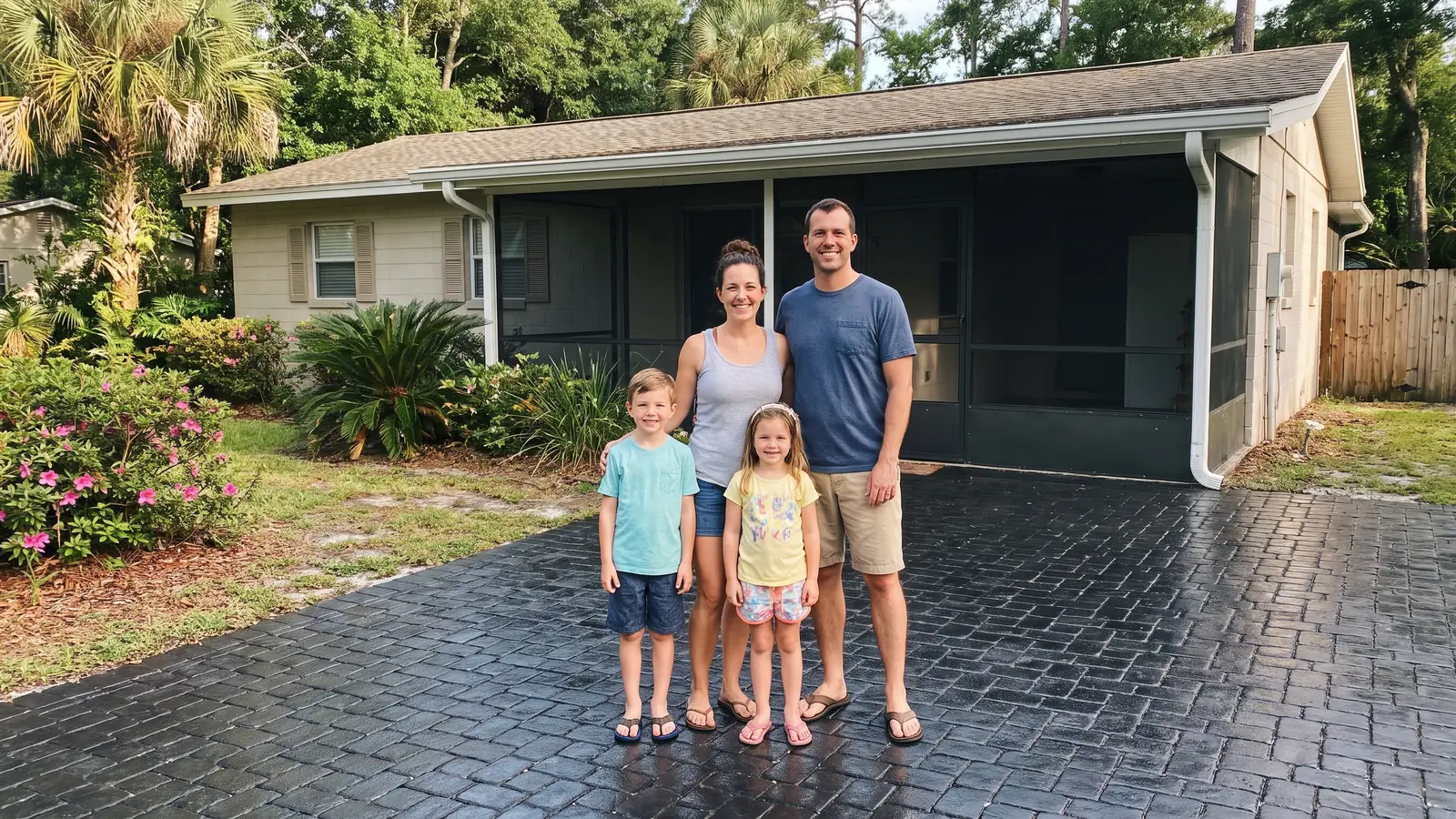
Paver sealing for Fleming Island homes
Paver Sealing in Fleming Island, FL
Fleming Island's pavers are 15 to 30 years old in places, so call (904) 593-3709 for a free sealing estimate.
- Brings out deeper paver color
- Fresh joint sand helps lock pavers in place
- Gives weeds less room to grow
- Makes the surface easier to keep clean
- Free estimate, no obligation
Request a Free Estimate
Free, no obligation.
Fast, careful paver sealing in Fleming Island
Paver sealing is available across Fleming Island, from the golf-course streets of Eagle Harbor to the lanes of Pace Island. A local contractor handles the wash, the sand and the sealer on drives, screened pool decks and walks, and the estimate is free. You will get a reply within 1 business day, often a lot sooner. To start, book a free estimate.
Many pavers on the island have been in the ground for fifteen or twenty years, and the sun has had a long time to work on them. By now the color may have dulled, the joints may sit low, and a coat from an earlier owner may be peeling. A wash, new sand and a fresh seal can give the surface a clean, even look again. To talk it through first, call (904) 593-3709.
Why hire a local paver sealing contractor in Fleming Island?
Fleming Island homeowners often hire a local paver contractor because so many pavers here are old enough to need restoration, and old coats change the plan. To hear how that fits your property, book a free estimate.
Walk-through first
The contractor reviews your Fleming Island pavers on site and names a price after. Replies come within 1 business day.
A range to check against
Around Jacksonville the published range is $1.75 to $3.25 per square foot to clean, sand and seal. Use it on any Fleming Island bid.
Restoration, not just a coat
Older pavers may need a failed coat stripped and low sections reset. The contractor tells you what yours need up front.
Rules respected
Matte keeps a natural look that suits most community rules. You choose the finish, and nothing is booked until you agree.
Get Your Free Estimate in Fleming Island
Tell us about your pavers in Fleming Island.
Free, no obligation
What paver problems show up most in Fleming Island?
Failed coats on fifteen-year-old pavers
A Jacksonville-area paver company says Fleming Island has many driveways and patios that have been in the ground fifteen or twenty years, so much of the work is restoration. A paver cost guide adds that white, hazy or flaking sealer from a prior job must be stripped first. Stripping adds labor, which means those pavers cost more than a plain reseal. Peeling or cloudy patches are the signs to look for. A color that has gone flat or blotchy, with joints sitting low, tells the same story. The earlier you catch it, the less restoration the pavers need. Two neighboring homes can have pavers from different builders and different years, which means two different plans.
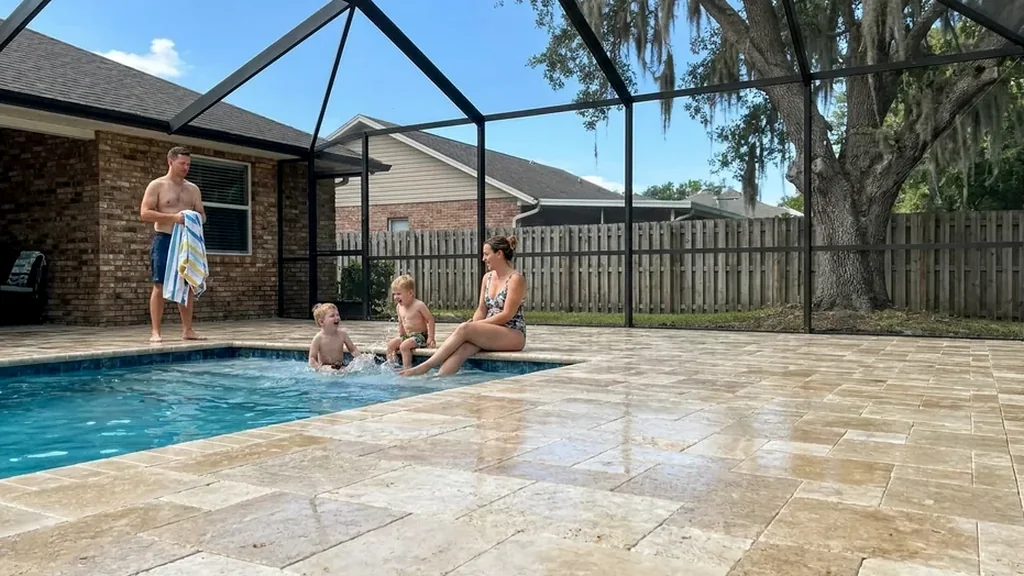
Pool decks under screen
Clay County paver companies point to screened pool decks as a common Fleming Island feature. A Jacksonville cost guide warns that surface-film sealers can hold moisture and leave a deck slippery, which is why most pool decks get a penetrating product with traction when wet. Sunscreen and chlorine also stress the finish. A deck that feels slick or looks stained is ready for attention. Dark rings from furniture and planters are common, and they show up first where pieces sit year after year.
Damp air from the water
Fleming Island sits between the St. Johns River, Doctors Lake, Black Creek and Swimming Pen Creek, and about 31.56 percent of its area is water. Doctors Lake is brackish because the St. Johns is an estuary this far down. Humidity slows drying and feeds algae in shaded corners. A north-facing walkway under oaks can stay green long after a sunny drive has dried. Sealing does not stop humidity, but it keeps algae from gripping the surface so tightly, and the next cleaning goes faster.
Sandy ground that drains fast
USDA records place the Penney series in Clay County and describe it as deep, excessively drained sand that water moves through quickly. Jacksonville also averages about 52 inches of rain a year, with brief, hard downpours in summer. Water slips through that ground and carries joint sand with it. Joints that open up let soil settle in, and weeds follow. A drive that needs sand topped up each spring is telling you the ground keeps moving. One local company says sealing cuts back weed and ant intrusion.
Acorn and leaf stains
UF/IFAS reports that water oak acorns are prolific and leave stains on asphalt and concrete. Mature trees line many Fleming Island streets. Brown tannin marks sink into porous pavers if they sit. Sealer locks them in, so the stains need treatment before any coat goes on. Laurel oak leaves fall in early spring, which means the staining season starts then. Brushing the pavers clean often helps, but it will not lift a set stain. Eagle Harbor's 22-acre nature preserve and fishing ponds show how much tree and water cover sits behind the homes here.
Are my Fleming Island pavers old enough to need stripping before sealing?
They might be. Eagle Harbor homes in one sample were built from 1993 to 2010, and Pace Island homes date from 1989 to 2002. Pavers on those lots could be 15 to 30 years old, and an earlier coat may have failed. Tell the contractor when the pavers went in, and whether anyone sealed them since, when you book a free estimate.
Fleming Island Plantation was approved in 1998 as a master-planned community, and Eagle Harbor and Pace Island came before it or beside it. Builders there included Centex, D.R. Horton, Admiral Homes and Beazer Homes, so paver styles and installers vary by street. Call (904) 593-3709 and name your community.
Most of these communities have an association. Florida Statute 720.3035 lets an association review appearance only as far as its declaration or published guidelines say. A Jacksonville paver page says a natural-look sealer may count as maintenance, while a high-gloss finish is more likely to need approval. Read your rules, then book a free estimate so the contractor can match a finish to them.
Fleming Island Plantation was planned for 12 subdivisions on about 1,680 acres, and its Village Square holds stores, restaurants and schools. Four builders worked there, each with its own driveway habits, so two neighbors can have different pavers. Call (904) 593-3709 and mention your subdivision so the contractor knows what to expect.
What does paver sealing cost in Fleming Island?
Safe Touch's Jacksonville price list is a handy yardstick: $1.75 to $3.25 for each square foot of the full job. A Fleming Island job lands inside it based on old sealer, stains and lost sand. Broad drives and pool decks together make a bigger total at the same rate. For a figure on your property, book a free estimate.
Stripping is the main jump in price, and it is the line most worth asking about. Failed sealer that has turned white or flaked has to come off first, and the contractor will say if yours needs it. A small job costs more per square foot, since setup stays the same, and locked gates add prep time. Call (904) 593-3709 and ask which factors apply to your pavers.
| Paved area | Typical example | Clean, sand and seal |
|---|---|---|
| 300 sq ft | Small patio or walkway | $525 to $975 |
| 600 sq ft | Two car driveway | $1,050 to $1,950 |
| 1,000 sq ft | Large driveway or pool deck | $1,750 to $3,250 |
| 1,500 sq ft | Driveway plus pool deck | $2,625 to $4,875 |
Math based on the $1.75 to $3.25 per square foot that Northeast Florida paver companies publish. Your contractor sets the actual price after seeing the surface. Repairs, leveling and stripping failed sealer are usually extra.
How does a paver sealing job work in Fleming Island?
Check the age and the old coat
The contractor walks your Fleming Island property and asks when the pavers went in and who sealed them last. Receipts or product names help if you still have them. Water-based sealer can never go over solvent-based sealer, according to one paver maker. Low or sunken areas are marked for repair first, since a coat over a dip keeps the dip. Peeling spots show where a strip may be needed. The contractor writes down each area so the quote matches the work. Photos of any peeling spots help the contractor price a strip before the visit is over.
Strip or wash
Where an old coat has failed, it is stripped. Elsewhere the pavers are washed to remove algae, tannin and dirt. Rust and oil spots get treated first, and sprinkler lines get a look too. A Jacksonville company says it spends about 2 to 3 hours of prep for each hour of sealing, so expect this stage to take most of the time. The wash is done with care, since too much pressure can loosen joints and mark the surface.
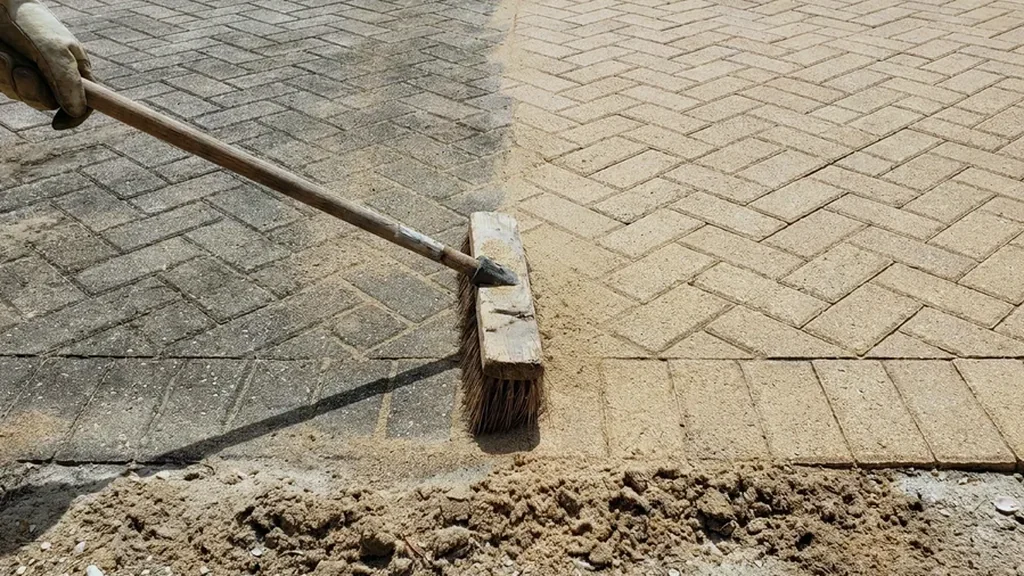
Joints get filled once more
Cleaning removes joint sand, and on Fleming Island's sandy ground the joints drain quickly. Joints are topped off with new sand and tamped down, and the pavers get a last sweep. Tamping keeps the sand from lifting in the first rain. Full joints hold the stones in place and leave less room for weeds. Matching sand color keeps the look even. A well-filled joint also sheds water on the surface instead of letting it settle in. Pond-side lots in Pace Island and Eagle Harbor can hold moisture in the sand, so the joint check runs along the pond edge too.
Wait for a dry surface
A Jacksonville page says pavers should be sealed only when fully dry, usually 24 to 48 hours after cleaning. Humidity near the water and shade from mature trees can stretch that wait. A sealer maker's bulletin wants about a day of dryness after rain or cleaning. A careful contractor waits and does not seal over damp pavers. Sealing too soon is how a coat turns cloudy white.
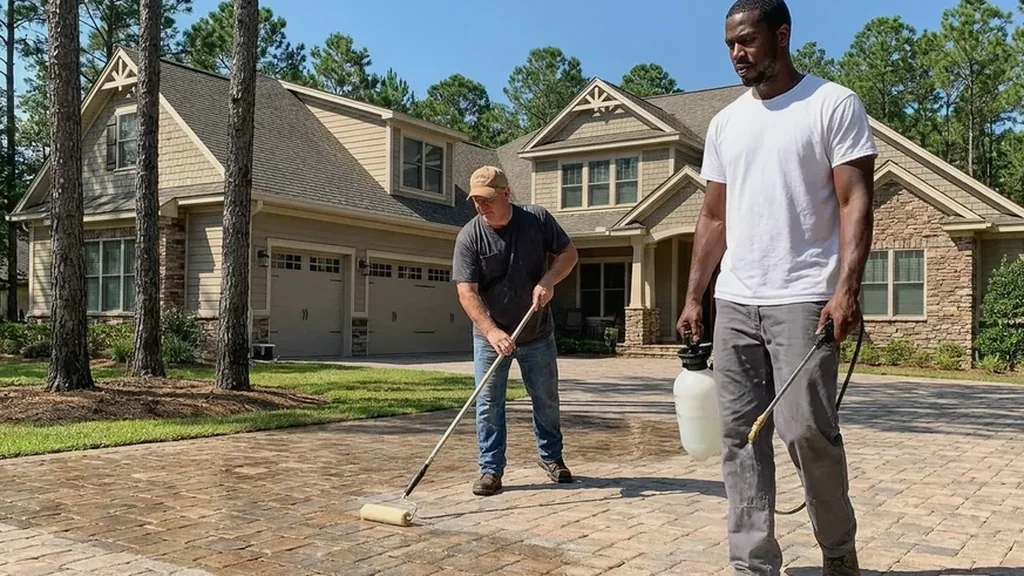
Seal and cure
A spray pass spreads the product and a back-roll works it in. Pick matte for a natural look, a wet look for deeper color, or a penetrating sealer for a pool deck. The usual two to five years that companies quote between coats shifts with sun, traffic and pool use. Keep irrigation off the pavers while the coat cures. Ask how long to stay off, since foot traffic often returns in hours but cars wait about a day. Ask the contractor to keep sprinklers off the pavers until the coat cures, which matters most on lots with automatic irrigation.
Complete paver services in Fleming Island
Older Fleming Island pavers often start with a strip, and newer ones with a wash. After that come sand, a dry spell and the coat. Each stage sets up the next, so none is skipped. To ask how long yours would take, call (904) 593-3709.
Broad paver driveways, screened pool decks and winding walkways each wear differently. Drives take tires and oil, decks take sunscreen and chemicals, and walks under oaks stay damp. Each gets the product and prep that fit it. Name every paver area on your lot when you book a free estimate.
Three sealer choices come up on the island: water-based, solvent-based and penetrating. The coat already on your pavers decides which can go on. A natural matte finish also tends to sit well with community rules. Call (904) 593-3709 to talk through the options.
Humidity near the water is the timing factor on the island. Shaded patios can need an extra dry day, and the wettest months run from May to September. The contractor keeps an eye on the forecast. To pencil in a date, book a free estimate.
Questions to ask before you hire
- Will you need my outdoor water spigot, or do you bring your own water?
- What does the sealer do to water that pools on a low spot in my driveway?
- How long should I wait before driving or parking on the sealed surface?
- What happens to the white powder on my pavers before the sealer goes on?
- Will the sealer change the color of my pavers, and can I see a test patch first?
- Can you work around a gate, a dog run or a car I cannot move that day?
- What is on the paperwork if the estimate changes once you see the old sealer up close?
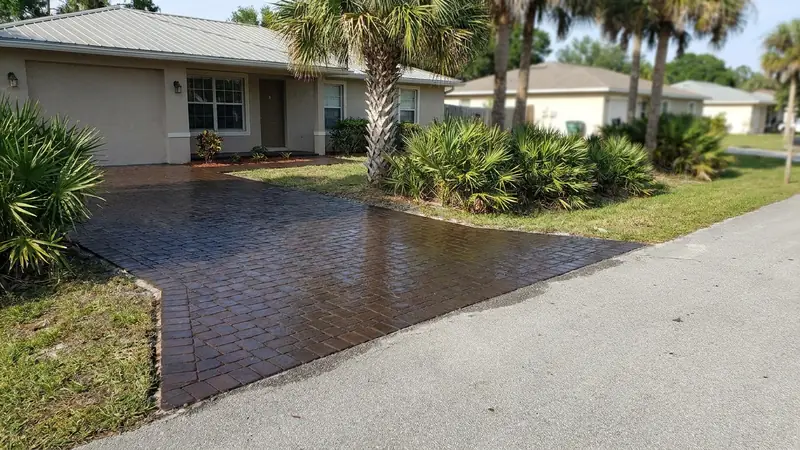
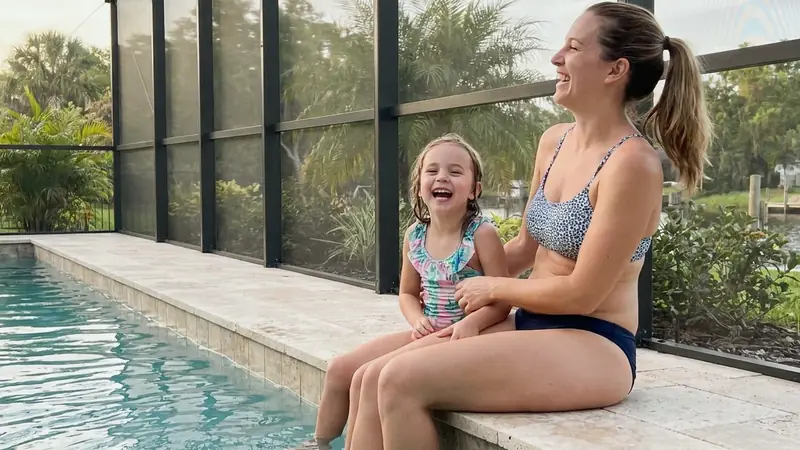
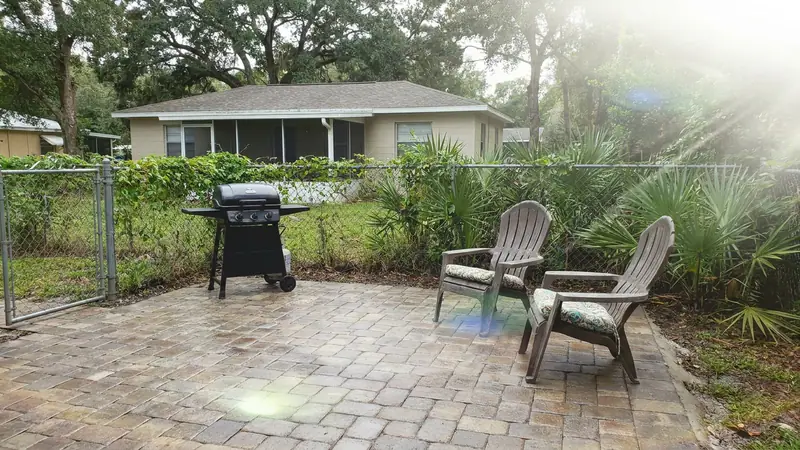
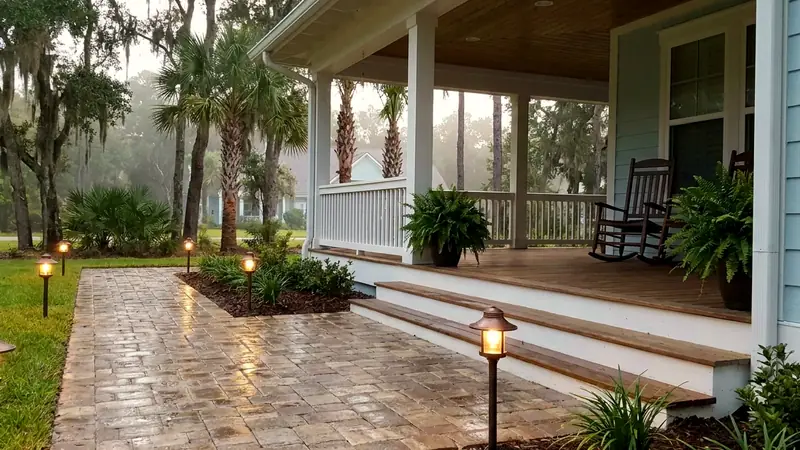
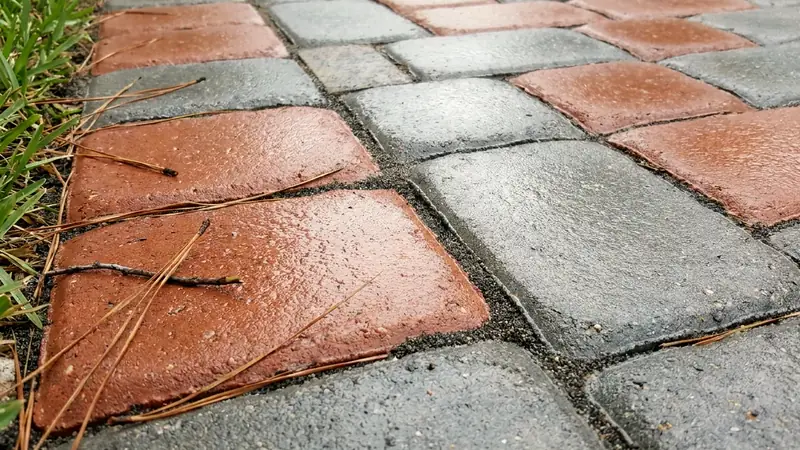
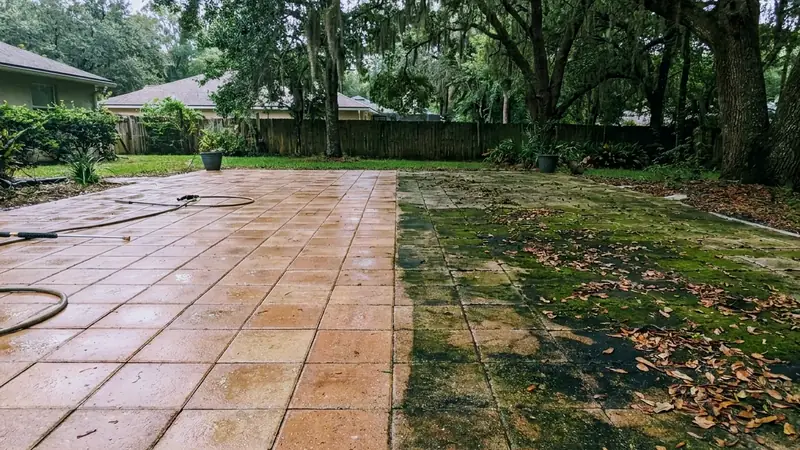
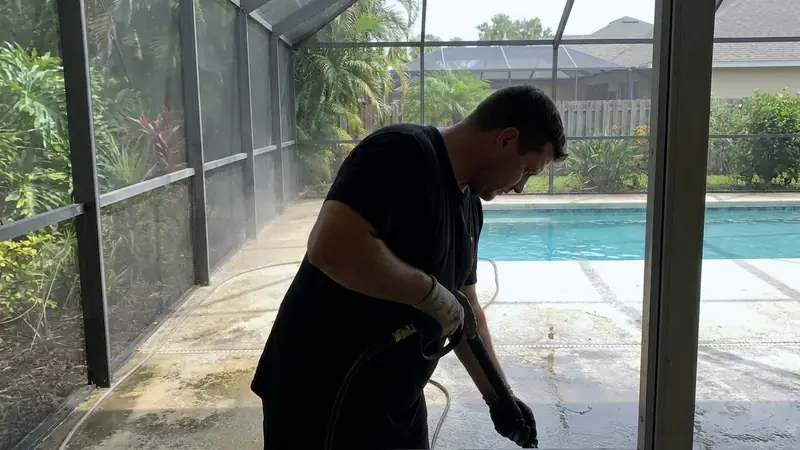
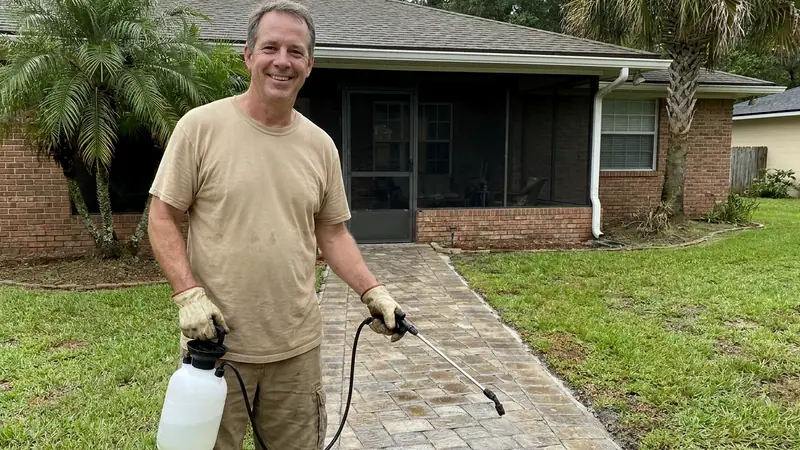
What do sealed pavers look like around Fleming Island?
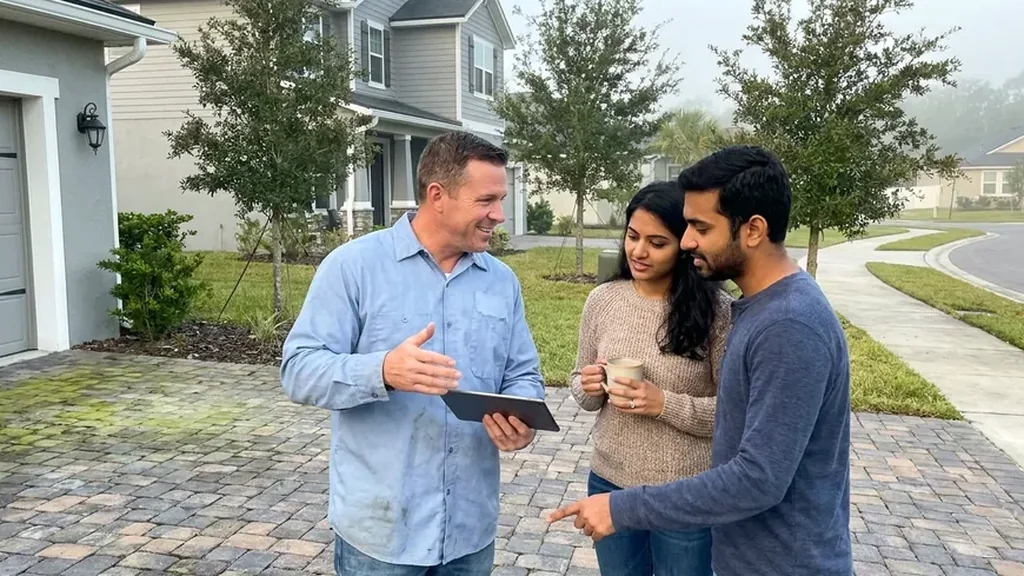
Why local matters in Fleming Island
A contractor who works Fleming Island knows how many pavers here are old enough to need restoration. That changes the first question from what color you want to what is already on the surface. Someone new to the island may price a plain reseal and then find a failed coat, which means a higher second quote. To get a contractor who knows Eagle Harbor and Pace Island on the line, call (904) 593-3709.
Association rules matter here too. With so many master-planned communities, a local contractor has seen what finishes get approved and which draw questions. That saves a second quote and a second trip, and it keeps you ahead of a letter from the board. If you are unsure what your community allows, book a free estimate and mention its name.
Water shapes the work as well. With the river, the lake and two creeks around the island, humid air lingers, and shaded pavers dry slowly, so patience is part of the plan. A local contractor leaves extra drying time and does not rush a seal, since a hurried coat can turn cloudy. Ask how rain delays are handled when you call (904) 593-3709.
Pace Island has eight ponds and a lake edge, and its first resident moved in just before Christmas 1989. Pavers there date back to the late 1980s in places. A contractor who has seen those older drives knows when a reseal is enough and when a reset is needed. Call (904) 593-3709 and ask for that opinion on your home.
What did Fleming Island look like before the master-planned communities?
Irish settler George Fleming received a 1,000-acre Spanish land grant and founded the Hibernia plantation here in 1790. In 1942 the Navy built four asphalt runways on the island as Naval Outlying Field Fleming Island, and they were demolished in the late 1990s to make room for housing. Pace Island was planned in 1984 on land once called Moccasin Slough. If your home sits on that ground, book a free estimate.
A sidewalk 8 feet wide now runs about 7 miles along the island. Eagle Harbor has an 18-hole golf course, and Fleming Island Plantation was planned on about 1,680 acres with its own golf course and a Village Square. Black Creek Park sits at the south end and Moccasin Slough Park at the north. Whichever of these is closest to your house, call (904) 593-3709 and name your street.
Whitey's Fish Camp opened on Fleming Island in 1963, and St. Margaret's Episcopal Church, begun in 1875, is on the National Register of Historic Places. Pace Island was planned in 1984 on land once called Moccasin Slough, and Eagle Harbor includes a 22-acre nature preserve with fishing ponds. Black Creek Park sits at the south end with nature trails. If you live near any of them, book a free estimate.
Frequently Asked Questions
How much does it cost to seal pavers per square foot on Fleming Island?
Budget between $1.75 and $3.25 per square foot, a Jacksonville price range from Safe Touch. Where a Fleming Island home lands depends on how much old coat must come off, how many stains need work and how far the joints have emptied. Stripping a failed coat is the line that moves the total most.
Is it good to seal pavers on Fleming Island?
For most homes, yes. A coat keeps color from fading, holds joint sand in place and lets dirt rinse off more easily. The cost is a fresh coat every few years, so decide whether that upkeep suits you.
How long do paver sealers last on Fleming Island?
Two to five years is where most quotes land for a coat. One local company puts pool decks and sunny driveways nearer 18 to 24 months. On a shaded Fleming Island walk, a coat can run longer.
Is it better to spray or roll paver sealer?
Crews usually do both. A spray pass spreads the product evenly, and a roller then works it into the joints and smooths puddles. Ask your contractor which tools go on your drive.
Why is paver sealing so expensive on Fleming Island?
Prep is the bulk of the bill. A Jacksonville company counts 2 to 3 hours of prep for each hour of sealing, and stripping, stain work, sand and drying fill that time. The coat itself goes on fast.
Is there a downside to sealing pavers on Fleming Island?
Yes, a few. The coat wears and has to be renewed, scuffs show sooner on a wet look than on matte, and film-forming products can feel slick on a pool deck. Humid weeks near the water can also delay a job.
How long should I wait to seal new pavers on Fleming Island?
A Jacksonville company says to wait about 90 days, so the white haze called efflorescence can clear and the sealer can bond. Another company says 30 to 60 days. The contractor checks the surface before choosing a date.
Does my Fleming Island association need to approve my sealer?
Possibly. Florida law limits an association's appearance review to what its declaration or published guidelines say. Natural-look sealers tend to read as maintenance, while color-enhancing ones are likelier to need approval.
Ready for a Free Estimate in Fleming Island?
Call (904) 593-3709 and tell us about your pavers.
Free, no obligation